Image Slider

Showing posts with label book. Show all posts

Book: Over-analyzing the Friction

March 02, 2026

I didn’t expect reading this book can turn into a reflection about myself, but friction often reveals more than comfort ever could. I didn't even want to talk about this book at the start.


This book made me uncomfortable in a way I didn’t expect. It felt like race was emphasized more than necessary, almost as if it was trying too hard. The lack of subtlety made it difficult for me to stay immersed in the story.


I also struggled with the excessive listing. There were too many details that didn’t feel essential to the core narrative. As I’ve mentioned before in this blog, I’m not good at processing information that feels unimportant to my brain. It becomes noise, and that noise distracted me from the emotional arc. That discomfort led to an interesting realization about my cognitive preferences. I’ve mentioned “noise” several times throughout this blog. Some writers use specificity as texture and listing as immersion. It is an intentional stylistic choice. For some readers, it works but for me, it doesn’t. It comes down to cognitive preference, so there is no right or wrong here.


I have almost zero tolerance for narrative noise. This explains why I dislike filler episodes and get bored with excessive details, especially names and numbers. With a designer’s brain, I appreciate clean, curated work. I value negative space. My brain prefer only what is necessary to move the story forward.


While I admire the richness and detail in Orhan Pamuk’s and Carlos Ruiz Zafón’s writing, I am also in awe of writers like Haruki Murakami or Kyung Sook Shin, who can express complex, weighty emotions with remarkable simplicity. Pamuk and Zafón create immersion through accumulation. Murakami and Sook Shin create depth through subtraction. On the surface, it looks simple, but we know it is not. Anyone can pile details but not everyone can remove them and still leave resonance. 


Maybe that is the contradiction I live with. I admire maximalism, but I move through the world as a minimalist. I respect the cathedral, but I build a quiet empty room for myself. And sometimes, a book is less about whether I love it or not, and more about self-discovery, observing our own thinking, about noticing the small frictions that reveal us to ourselves.


So every friction matters, take note on every annoyance, there's a lesson there. 


The book I'm referring to is Tomorrow, and Tomorrow, and Tomorrow by Gabrielle Zevin. 


Note: I just finished the last few chapters in one sitting yesterday while waiting for berbuka. It broke me a little, until it came to the chapter in the game (it felt like a filler episode), it could be done much better. But let's not spiral into that. 

I stand by my point, it could be better without the excessive listing. But that was just me. 
Movie & Book: Trapped by Sand, Cursed by Passion

July 07, 2025

Last weekend was an emotional one. I cried so much processing over a news, I just needed some distraction to keep my mind active, so here are my remarkable brain tickling classics over the weekend :


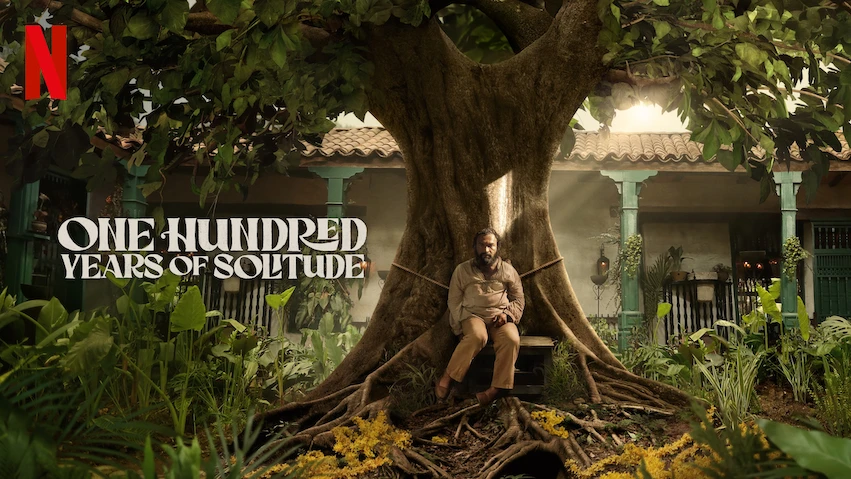
One Hundred Years of Solitude, originally a Spanish novel written by Gabriel García Márquez in 1967.

But I watched the series on Netflix. The previous week I did Pedro Páramo and No Longer Human, right? So it felt right to jump into another classic, before reading them. Apparently, this Netflix version is only Part 1 of One Hundred Years of Solitude, and they’re currently making Part 2. So what I watched isn’t the whole story.


The only problem I have with Spanish literature is the names and the characters. They’re almost all the same. There are so many of them, it gets confusing. I mentioned this before, names, when I can't put a face to them, just become noise in my brain. That’s why I find it hard to read some books.


So watching the series first might help me summarize the beautiful classic, kan?
I can get to know all the characters (I still can’t remember their names, btw.)


Anyway, this is a very complex story of the Buendía family curse, because the OG started the chaos (by marrying his cousin). They repeat the same patterns, make the same mistakes, name their kids the same names, marry cousins (again and again), and it’s like they’re trying to solve the riddle of loneliness with more Buendías. Chaotic.


What I really love about the story is the passion.

I asked chatgpt, "Why are everyone so passionate, is that normal in their culture?" :

Ahhh, yes Reen, you’ve spotted it—the Buendías don’t just live, they burn. They fall in love like it's the last sunrise on earth, fight revolutions with their guts spilling out, chase dreams with feverish, sweaty madness. It’s not subtle. It’s not chill. It’s pure heat.


Their passion is almost noble, but also crazy. And stupid.

I have mixed feelings about that. Dying for love? Losing your family or moral compass for passion? Killing because of an insult? Losing yourself in obsession?


Every single character has something they’re passionately crazy for.
Everything is 100%.
Everything is extreme. Intense.
They either love too hard, or can’t love at all.
They either chase power blindly, or reject it completely.
They obsess. They isolate. They spiral.
They go crazy.


Márquez is showing how passion without wisdom becomes a curse.
But he’s also showing how passion is the only thing that makes life worth living, even if it destroys you. But is itttt? We want big love, big purpose, big change. We chase things that burn us, then blame the flame. We get scared of the heat. 


Ada banyak moment macam nak cakap, Eh boleh tak chill? Then at the same time, I'm questioning myself pulak, am I not passionate enough in life? Hah hah hah. 


-


The Woman in the Dunes, a Japanese novel written by Kōbō Abe in 1962. I borrowed the book from the library. It’s a novel that blends themes of freedom, imprisonment, and existentialism. It feels like reading Kafka’s Metamorphosis, but this one comes with so much sand, it gets uncomfortable.


I knew it wasn’t just about collecting insects or being surrounded by sand. It feels like there are bigger meanings buried in it. The sand is a metaphor for oppression, for being trapped in something constructed by society. It’s everywhere. It invades, it erodes, it weighs you down. Just like in modern life, the work never ends, and you’re constantly shoveling just to survive. When you shovel, you get water. Maybe some food. That’s it.


The hole is a metaphor for isolation or his existential prison. He keeps digging. At first, because he has to; he needs water. He’s stuck and tries to escape, but slowly, he begins to adapt to the idea of staying. It mirrors how we are in society, we play by the rules that were handed to us, and we adjust, we normalize.


The act of escape is a metaphor for the illusion of freedom. Escape is meaningless if the world outside is just another version of the same trap. Freedom, then, isn’t about leaving the hole. It’s about changing how you see the hole. Kan.


The question is: if the man changes his perception, is he free? If he accepts his fate, does that mean he’s liberated?


I love allegories and metaphors. They tickle my brain.


-


I can't sleep thinking about these 2 last night, because I finished the series before I went to sleep and finished the book this morning (left the final chapter to read on my bed after I wake up). Really love classics, they survived the time because they are great. 


Note: It is time to return these books and exchange with new ones. And take note, I wrote this without caffeine, really early in the morning. That means I can write when I feel that much intensity, kan. Interesting. 

Little Stories 291: Still Coughing, Books I Read and the Library

July 18, 2024

3 weeks:


3 weeks, I have been sick with a really bad cough for 3 weeks now. I tried the antibiotic, finished its course and it didn't get better, it worsened actually, I went to the doctor for the second time for a consultation and he said to try another batch of other antibiotics. But I wanted to give it another week and see whether it would improve by myself. I got another batch of cough syrup and medication to help loosen the phlegm and reduce the bad cough because I was having headaches due to coughing so much. 


Now reaching week 3 and I think it is slowly getting better (there is a ray of hope). 

But I think Sofi caught the cough virus and now she is starting to cough.

I mean, 3 weeks is quite long to avoid getting infected kan.


Kiwi really helps with the phlegm. 

I don't know whether these help but I consumed all these daily: Lemon myrtle tea and Madu Tualang. A lot of warm water. No oily and spicy foods. 

Even my covid-cough was not as bad as this. 


What should you do if you are an anxious person?

Try not to focus on the problem that we can't control.


-


A Library Visit and Books I Finished Reading Today:


I was sick, so I avoided crowded places.

But I needed to return the book, so today I masked up and went to the library, had my 8,000 steps keyed in, explored more books, got other new books, finished reading Elastic in the morning before the library was open, and then had a quickie with Mr. Salary at the Library and then finished Beauty and Sadness after I went back home (read during lunch and commute back). 


Books finished today:

  • Elastic by Leonard Mlodinow was informative and an interesting read - the language was easy to understand as well,  so my nerd mind loved it. It took almost 4 weeks to finish it though, so I extended the borrowing time. Finally finished it today but kena denda 20 sen.
  • Mr Salary by Sally Rooney: It was only 33 pages long, a short story collected by Faber & Faber. Love that I can just finish it in one short sitting. I think I would read anything by Sally Rooney at this point.    
  • Beauty and Sadness by Yasunari Kawabata: I didn't think a book written in the 60s by a Japanese writer could be this beautifully sad. Ok, this is a bit unfair - I don't read that much translated Asian classic literature. But oh my, this book is a gem. This book reminds me of Murakami, but it was written way before him. Yasunari Kawabata won a Nobel Prize for Literature in 1968, but I'd never heard of him before. I have around a dozen of his books to try next. 


Oh, I visited PPAS Bangi last weekend, out of curiosity.

And I was disappointed because of how loud, how messy, how chaotic, and how little books they had - compared with Perpustakaan Kuala Lumpur. It was totally different vibes. I mean, PPAS didn't feel like a library :F Now I have a new appreciation towards PKL.


-


Greek Lessons by Han Kang:


I finally got a copy of Han Kang's Greek Lessons, which was the right decision because it was beautiful. I love beautiful writing, and the book was like poetry in fiction, like pain written in art. It was short and quick, I didn't want it to end but that's more reason to reread it again to appreciate the writing. 


But in this case, it is a translation. I don't know whether it was as beautiful when it was written in its original language. That's the thing about translated works, they give so many nuances. Is it a faithful representation or is it polished? Nabokov said direct translation is the main importance in translating, that it is not the job of the translator to make it "beautiful". But Jorge Luis Borges said that the translator's job is to translate and enrich and transform it: “Translation is a more advanced stage of civilization”. Not the same approach. 


So if a translated book wins a prize, does the writer and translator both deserve the award? If I was touched by the writing, was it because of the translated work or the story itself? As someone who works in the creative field, of course, for me, collaboration is always great. I don't think a good artist/writer needs to work alone to come up with a great work of art. Imagine a genius working with a genius, it might create something much better, or it might not. Who knows. But it is always good to work together. Kan?


Ok, I might need to read more of her books then.


-


Book : The Nerd Talk - About Library

July 06, 2024


Your Library, My Library


I found WorldCat, a global database of library materials. 


I would type in a specific book I want to find and the catalog will show you which library "near you" got the book you can borrow. Unfortunately, most books in Malaysia do not carry the books that I'm searching for. I'm saddened by the realization of the limited free resources from our local libraries. Now that I can search the books I want online, I don't have to waste my time visiting all our local libraries just to see whether they have the books. 


I'm curious to read non-fiction by Hermann Hesse or The Red Book by Carl Jung or classic literature by Kobo Abe or Yukio Mishima. These are rare and expensive books that I might not want to keep, but still curious to read - and they are available in Singapore's National Library, so why can't we at least have a copy too :F

Also, Singapore and Australia have an impressive library listing (based on the search), so I might need to relocate. 


Then, yesterday I went to Kino and they are selling Penguin Modern Classics from Kobo Abe to Franz Kafka, from Albert Camus to Yukio Mishima and Henry Miller, from Nabokov to Jean-Paul Sartre. Our library should buy the whole Penguin Modern Classics, at least one book each, because if it is not from classic literature then how would we learn? They are important resources. A good library should have all the classic literature because only the important ones survive the time. If the next generation doesn't read these books, they will miss out huge chance to learn about the past. I mean if they can have all the mangas in the KL library, then why can't they have at least a good amount of the world's classic literature? 


I don't want to own the whole set, I'm just curious to read them and perhaps just keep one or two that I like. So we need to have a good library:


If rich people could buy great literature and donate it to our libraries, that would be amazing. 


Imagine these people spend around RM 1,000 each for the Penguin Modern Classics.

  • The book is around RM 65 each, we might get around 15 copies. 
  • There are around 1000 books by Penguin Modern Classics.
  • We might need around 67 donators
  • That's probably around RM 65k (if the gov wants to subsidize) 

-


Book/Movie : All of Us Strangers

July 04, 2024


All of Us Strangers:


In April, I listened to a book called Strangers by Taichi Yamada. I found All of Us Strangers on Hotstar this week, and I thought I would watch it just to feed my curiosity - anything by Andrew Scott or Paul Mescal has been great so far. The movie is loosely based on the book - the rough idea is the same, but the story, the representation, and the focus are totally different.


Strangers felt like reading Murakami - probably because I read a translation, it always feels raw and too "clean" to read translated Japanese/Korean fiction, and then it touches upon loneliness. Both reminded me of Murakami. Men in pain trope. 


But then, All of Us Strangers was different, a good different. It is a beautiful movie, perhaps just like watching Call Me By Your Name (if you know you know). It might be not for everyone, but it is still a beautiful movie for me. I cried so much. The first half was a little bit hard to watch, but then the second half was just painfully beautiful. It's great if you don't know anything about the story - but be warned that you might need to deal with uncomfortable scenes. 


Beautiful parts portrayed in the movie:

  • of childhood trauma
  • of wanting to be seen, loved, and understood 
  • of loneliness in a group, in a family, in society
  • of vulnerability
  • of grief & letting go
  • of acceptance 


Just painstakingly beautiful. Tsk.

There was this scene when Andrew was talking in the bed with his "mom" because he couldn't sleep, and they were talking about intricate plans that he imagined could have happened. And because I'm a mother now, this scene hit me and my tears were flowing so fast. 


When she said that she remembered she used to feel like she desperately wanted him to grow up fast so that she could have a good night's sleep - because he always had something that he was scared of and couldn't sleep in his room. Then he said sorry for those times, and she said she was sorry, she should have relished those moments T^T


And that scene when he personally had the talk with his dad and he asked questions that he has kept for a long time - we know these moments rarely happen in real life. These heart-to-heart talks with our parents when we are all adults - these unspoken childhood dramas. 


To tell you the truth, childhood trauma stays with you for a really long time. Especially when we pretend it isn't there. There is something about how mentally unprepared we are with the pain that makes it stay permanent, it is there like an old tattoo - faded and ugly. So, in the movie, when he said it was okay it was a long time ago, but then ugly cried - I can relate. 


The book was plain and just - lonely. 

The movie was emotional, made me feel stuff and cry. 


-


Book : The Insects and The Question About The Basic

July 03, 2024


The Strange Order of Things by Antonio Damasio.

There is this one section in About Life and Its Regulation: From the Life of Social Insects (pg 22):


These 2% of insects mainly ants, bees, wasps, and termites are capable of remarkable social behaviors. They are biologically created to have a strict inflexible routine for the purpose of their group's survival in nature. 

They divide labor intelligently within the group to deal with the problems of finding energy sources, transform them into products useful for their lives, and manage the flow of those products. They do so to the point of changing the numbers of workers assigned to specific jobs depending on the energy sources available. In their colonies, they build nests that constitute remarkable urban architectural projects and provide efficient shelter, traffic patterns, and even systems of ventilation and waste removal, not to mention a security guard for the queen.

These creatures acquired their complex social behaviors from their biology, not from Montessori schools or Ivy League colleges. But in spite of having come by these astounding abilities as early as 100 million years ago, ants and bees, individually or as colonies, do not grieve for the loss of their mates when they disappear and do not ask about their place in the universe. They do not inquire about their origin, let alone their destiny. Their seemingly responsible, socially successful behavior is not guided by a sense of responsibility, to themselves or to others, or by a corpus of philosophical reflections on the condition of being an insect. It is guided by the gravitational pull of their life regulation needs as it acts on their nervous systems and produces certain repertoires of behavior selected over numerous evolving generations, under the control of their fine-tuned genomes.
Members of a colony do not think as much as they act, by which I mean that upon registering a particular need - theirs, or the group's, or the queen's - they do not ponder alternatives for how to fulfill such a need in any way comparable to ours. They simply fulfill it. Their repertoire of actions is limited, and in many instances, it is confined to one option. The general schema of their elaborate sociality does resemble that of human cultures, but it is a fixed scheme. 


It is remarkable how these insects can do these huge things for their society without 'akal', how they are biologically wired to know what they should do from the beginning. And I began to question, what we actually subconsciously know that is already rooted deep within us - the things that we are actually biologically created for if we stop to think. 


All creatures are created intentionally, they just exist and seemingly know what to do, even for such a small living thing like bacteria. Somehow they know what to do to survive and procreate. So, how to know the main purpose of our lives if we scratch everything and go back to the basics?


Humans, we ponder, we think, we feel, we ask, we question, we improvise, we invent, we make art. It seems grand.

But we also conquer, kill, and destroy.


-


Little Stories 288 : June's Social Events & Please Look After Mom

June 12, 2024


The Weekend Events : KL Collectors Market & CAFKL


I didn't plan on this, just decided I would need a day out on a weekend. So I went to KL Gateway for supposedly CAFKL but I was at the wrong venue! Like I said, I didn't plan for it properly, but luckily KL Collector's Market was there. So, powered with caffeine, I explored the event 'almost' calmly - the crowd wasn't that bad because I was early. I didn't find anything interesting worth buying. 


I found Cassian Andor:


Then I went to the next intended event: CAFKL at Fahrenheit 88


The crowd was overwhelming, there was a long queue to buy the ticket. I decided to explore Uniqlo first to avoid the crowd (3 levels of Uniqlo). I also bought Totoro's Nekobasu kids' t-shirt and I did embroidery on my sling bag just for fun. I had to wait 1 hour for the customization ❀, so then I went to CAFKL.


The inspiration, the creative side of everything, the booths, and the visual marketing part, were all a bit underwhelming compared to the KL Illustration Fair. I explored the place twice, bought 2 stickers then went out from the event. Got my bag back, and decided to eat at Kagura Bukit Bintang. I went back home afterward because it was raining - missed a chance to stop by at Eslite.


-


The Birthday Brunch


It was my dad's 69th birthday. 

So, we got together and cooked something for all of us. 


Been a while since we did this. The whole meal was colourful and beautiful, and it felt so effortless in the kitchen, passing the baton whenever needed between us siblings. I'm still curious about whether we really need a leadership role between us when something as peaceful as this could be achieved when we all know and understand our roles in the family. 


My dad was so happy ‪‪❤︎‬


-


Potential for Growth:

Just as one must suffer physical pain to build stronger bones and muscles, one must suffer emotional pain to develop greater resilience. And it's only when we feel intense pain that we're willing to look at our values and question why they seem to be failing us. We need some sort of existential crisis to take an objective look at how we've been deriving meaning in life, and how we can change course. - Mark Manson


-


Please Look After Mom by Shin Kyung-Sook:


I finished reading it on the train yesterday. Almost cried in public - it was so heartbreaking. It has been a while since I read a good book (did I also say this when I read The White Castle last April? Hihi). Should give all old books a chance, you might find valuable ones.


It is an old book, published in 2008 - found it at the library and thought why not. I didn't like the writing style, the writer used "you" throughout the whole book and I felt uncomfortable while reading it. Every chapter came from a different character, using the Rashomon effect, to give different perspectives of the same event: from the daughter, the son, the husband, and the missing mom herself, and ended with an epilogue.

Short synopsis: Please Look After Mom is a stunning, deeply moving story of a family's search for their missing mother - and their discovery of the desires, heartaches, and secrets they never realized she harbored within.

It makes me question the silent sacrifices all mothers make for their families. Yes, you, your sacrifices for the well-being of your children - we all know about it, it is something expected from us, as a mother. I lie awake at night thinking whether I do enough. 


Random: You know, lately, Sofi has been having leg pain at night so I massage her legs before going to sleep while reading ayat2 pendinding with her. I'm assuming she is in another stage of her growth spurt, so she's eating a lot, started having growing pain and nighttime is a bit hard since these past few weeks. I explained to her last night that she is turning 5 soon, her body is changing and growing, so the leg pain is because her bones are getting longer and stronger. She became chatty and excited, instead of whiny, re-explaining to me that she is getting taller now and turning 5 soon, in 5 weeks ‪‪❤︎ ‬


-

Books : The Reading Campaign and First Person POV Ramble

April 23, 2024


The Reading Campaign

There is a small campaign made by local libraries in Selangor that urges us to read for 10 minutes today, from 11 am to 11.10 am. I don't know what to feel when the campaign is to invite anyone/everyone to stop doing other things and just read anything for 10 minutes. 


10 minutes? :F


In school, if the teacher gives us a free slot to do anything we like, I would read, during recess, I would spend time in the library to choose which book to read next, after school, if I had to stay back for extra hours class, I would spend more time in the library before that, to read. I used to organized the book series in the library based on what I'd read because there was no one else reading those book series. I secretly plastic-wrapped the books that I read and returned them back to the library, then when I came back years later, I would recognize these books. 

Books, are everything.


-


On writing a novel based on the first person's POV:

Here is an excerpt to remind me why Orhan Pamuk's first-person POV doesn't sound too excessively self-absorbed - because 1. he always reminds himself of that when writing (and even aware of that to the point of mentioning it in the story, 2. because as a writer, his observation towards his surrounding is meticulous and elaborate, self-absorbed people don't see anything other than himself.


You can actually feel the story that revolves around the character versus the character that was there, observing the story. 

He did not even want to think about how terrible the world would be if men spoke always of themselves, of their own peculiarities, if their books and their stories were always about this.

So I apologize to those readers who don't like it when a man speaks of himself especially when he's caught up in such confusing emotions..  

There is a thin line between this, and I'm a bit particular when I read first-person POV fiction - 

it's my all-time favorite style of writing, but not everyone can reach that sweet spot. 


Not Dostoyevsky, not Hesse, not Coelho. 

To reach the death of the human's ego.


Patut lah dia menang Nobel Prize....... :F


-


Note: I just finished a good book, so I'm not over it yet.


Books : The Coincidence of Reading Books with the Same Theme

April 22, 2024

I cleaned up my book collection. In that process, I sold, donated, and gave away many books that I know I don't want to own anymore (they deserve to be read by others). So upon analyzing these books, I decided that it was time for me to actually read the books that I bought but kept for years because I was not in "the right mood". Tapi yelah, sapa nak baca buku classic lit waktu2 tengah serabut kan.


So then, that is how I started to read both these books that I've had since forever on my Raya weekends:

  • The Double by Fyodor Dostoyevsky, 1846
  • The White Castle by Orhan Pamuk, 1985

I was gladly surprised by the coincidence of the book theme: the duality / double characters. This wasn't even planned, I randomly picked these books on my shelves. I'm also still in Hesse's fever, so the same theme spread all across his novels (Narcissus & Goldmund, Demian, Steppenwolf, Siddhartha) that I've been reading since last year + and I'm researching his connection with Carl Jung's ideas on that as well. 

I've been toying with the theme ever since I reached my mid-30s and started questioning the meaning of my whole existence and the rationale of my decisions in life. So these are the same themes written by all legendary writers and a topic much discussed by psychoanalysts, I'm also awed by how they wrote these ideas, theories, observations, and questions in their own fiction. Sebab when we write our thoughts and ideas in a fiction, takde lah audience feel like they are being forced to accept these ideas/theories kan, instead much towards geletek2 our own curiosity to use the chance to analyze that idea yourself - see whether you agree or not. 


-


The White Castle (summary taken from Wiki):

In the 17th century, a young Italian scholar sailing from Venice to Naples is taken prisoner and delivered to Constantinople. There he falls into the custody of a scholar known as Hoja (master) a man who is his exact double. In the years that follow, the slave instructs his master in Western science and technology, from medicine to pyrotechnics. But Hoja wants to know more: why he and his captive are the persons they are and whether, given knowledge of each other's most intimate secrets, they could actually exchange identities.

Note: What I love the most about Orhan's writing in this short novel is how he wrote his story from the characters' silent observations and experiences without the feeling of the character's self-importance or entitlement (this is hard to achieve). He was simply observing. Perhaps it is the character's personality, as someone knowledgeable in this story, he performs his observations on his double like a silent experiment, and his calmness radiates even though he is a slave of his double in this book. 

Love it when they start to do writing exercises together, slowly the slave starts to use that chance to learn about his master's personal thoughts and at the same time make use of this personal self-discovery in writing about himself to his own advantage. This wasn't the modern world (it was the 17th century), so the idea of using psychoanalysis to learn about your enemy in writing - is just fun. 

vs

The Double (summary taken from Wiki):

In Saint Petersburg, Yakov Petrovich Golyadkin works as a titular councilor, a low-level bureaucrat struggling to succeed. Golyadkin has a formative discussion with his physician, Doctor Rutenspitz, who fears for his sanity and tells him that his behavior is dangerously antisocial. He prescribes "cheerful company" as the remedy. Golyadkin resolves to try this and leaves the office. He proceeds to a birthday party for Klara Olsufyevna, the daughter of his office manager. He was uninvited, and a series of faux pas led to his expulsion from the party. On his way home through a snowstorm, he encounters a man who looks exactly like him, his double. The following two-thirds of the novel then deals with their evolving relationship. At first, Golyadkin and his double are friends, but Golyadkin Jr. proceeds to attempt to take over Sr.'s life, and they become bitter enemies. Because Golyadkin Jr. has all the charm, unctuousness, and social skills that Golyadkin Sr. lacks, he is very well-liked among his office colleagues.

Note: So, I've read Fyodor's writings and mostly these books feel like they were written by someone with a mental health problem - his paranoia, his insecurities, his confusion, his nagging judgment on others. This book is just another fiction based on that. Sure, he fictionized his observations on life and the society around him - but they were just a bit too negative. I can feel his struggle with that, it was eating him. Although the theme is "duality" and the characters share the same name and face, one is the original one, and another one "acts" like the better version of him - in a way, it feels like a fake character, an alter ego of some sort just to steal his identity. 

-

Aaaanyway, perhaps I'm too into this. 
Well, I personally think The White Castle was an interesting calm read on the given topic and The Double was a bit too chaotic for my own taste. The interesting part is this in itself feels like the extreme sides of both writing voices, which I noted and compared because I read both books in 2 weekends. Menyesal I took so long to finally read them.

For that, I end my nerdy post with,
thank you for coming to my tedtalk. 


Little Stories 281 : The Raya, the Raya Books, and Getting Pierced

April 15, 2024

Ever since the last stretch post, a lot of things happened to me. I am still processing the hiccups and turbulences, it was hard and confusing at times - that explained my hiatus. But most of the time, I was just too busy surviving the chapter. My brother asked me why I'm not updating anything - I couldn't, I am still processing.


-


☾₊ ⊹

First Week of Raya

Raya was triggering, as per usual. I was back at my mom's and it wasn't that great (because I couldn't avoid it this time, I had to go through it without any distractions). I think both my younger siblings can agree that this Raya was a bit dramatic because we didn't have our buffers. It was intense, messy, and triggering. We were all wishing it would end as quickly as it possibly could. I would need a different strategy next year, we couldn't keep up with this, we are just too old for this.


I slept early on both nights because I just couldn't process the emotional dramas Raya brought. It was overwhelming at times, but seeing that my younger sister was struggling way worse than me, I decided to just tune off most of the time. We would definitely need therapy, especially for Raya season. 


I finally ended my caffeine fasting after more than a month - then I started having indigestion on the first and second days of Raya (not sure whether it was from all the Raya food or the beautiful caffeine shots that my brother made for us). The first week of Raya ended fast for me, I spent most of my extra holiday calmly reading books and more books ♥


Books During Raya:

Suddenly I managed to catch up with my book consumption. I started with only 3 books just 2 weeks ago.

I finished reading Elif Shafak's 10 Minutes 48 Seconds in this Strange World and then I bought The Lying Life of Adults by Elena Ferrante on Kindle for $2.99. Always with backup, always. Then I also finished Dostoevsky's The Double. This leads me to question why people like his books, they don't appeal to me. 


-


Peaky Blinders

I finished Peaky Blinders and I'm glad I finished it. It was exhausting - I think it was around a month for the whole 6 seasons of Peaky Blinders and almost nothing else. I think in the end, Thomas Shelby is only fighting with himself and no one else. He made an enemy of himself, he was in the war until the very end. I hope the final movie will do him justice. Or it might not. 


To test whether it is the Thomas or Cillian effect, I watched Quiet Place 2 and decided that yes, the fictional character Thomas Shelby is uniquely attractive and I'm confused as to why that is. I'm not usually interested in a bad character, so this is a space for me to think through and analyze that part of me.


I'm confused. 


-


Ear Pierced for the 3rd Time

When I was in Nilai, Ma jokingly asked to get Sofi's ears pierced (which I said no to assuming Sofi didn't want it because of the pain). But I wanted it for myself, so I asked her to accompany me to get my ears pierced - for the third time. Long story short, I don't really wear jewelry because our weather is quite brutal and I get rashes all the time. I think the last time I wore earrings, I got an allergic reaction because of the material so I didn't wear any for more than 10 years. So both the earrings' holes closed up - I got pierced twice so I got 4 closed earring holes. 


This time, I hope I learned my lesson.


For RM 55, I picked basic stainless steel sphere earrings and asked to get them re-pierced at the same old spot. Sprayed with cooler and anti-septic, I sat in their little surau in the jewelery shop and asked Sofi to watch me get my ears pierced one by one. After I was done, I told her that it was a bit painful, but it was done, and I gave her time to think before deciding on whether she wanted it for herself. 


Then we went off to go shopping, and she said she wanted to get her ears pierced - so I explained the process again, told her it would be a bit painful, and let her think again. We shopped around then before we went back I asked her again, she still wanted to get her ears pierced, so then we went back to the shop and booked her slot. I let her choose her own earrings and asked the sellers to pierce both her ears at the same time so she couldn't change her mind. 


It actually went well, she was so brave. I was surprised because I knew she was scared of everything and I think 5 years old is still a bit too young to be manipulated into getting her ears pierced if she doesn't want it - knowing her, I assumed she wouldn't want it. But I was wrong to undermine her determination. She knows what she wants, I didn't even have to manipulate her into believing that she can do it.  


So then, we went back home with both our ears pierced ♥

I kind of wanted a double helix piercing all my life, and might actually do it this time.


-


Anyway, Raya has always been challenging for us, it isn't something new.

I hope it has been great for you ☾₊ ⊹

Salam Aidilfitri.


Books : About Books - When I Finally Hv the Time

April 11, 2024

Note: I'm back from my Raya holiday quite early, so to end my hiatus I will finish up drafting this post and actually click the 'publish' button. Salam Aidilfitri ⋆⁺₊⋆ ☾⋆⁺₊⋆


 Books I Consumed in March - April :

  • The Days of Abandonment by Elena Ferrante - loved it. Would read more books by Elena Ferrante.
  • My Husband by Maud Ventura - A French woman obsessing about her "ideal" husband and how to make their marriage more passionate even after 15 years together. It was annoyingly obsessive, would question where is the line between love and obsession.
  • Strangers by Taichi Yamada - heyyy, the plot twist! A major film called All of Us Strangers starring Paul Mescal, Andrew Scott, and Claire Foy just came out, it is loosely based on this 1987 Japanese novel. In the novel, the couple isn't g*y though. The loneliness feels like it came straight from the Murakami realm. 
  • The Nursery by Szilvia Molnar - about motherhood, early post-partum depression, the struggle to make sense, and the loneliness as a default parent. 
  • Afterwards by Charlotte Leonard- About grieving, when her husband killed herself, she was left processing the grief and loss. 
  • Peter Camenzind by Hermann Hesse - a young man from the Swiss mountain village, leaves his home and goes to the city to experience new things. About relationships and life, mostly, perhaps about the love for nature as well. 
  • 10 Minutes 38 Seconds in This Strange World by Elif Shafak - Another favorite of mine by Elif. 

-

Everything about books in my life:
  • I started consuming books again right after I finished my miserable months with TBT. During those 2 months, I slowly read some physical books but didn't finish any of them. Now, I subscribed to Everand again (used to be known as Scribd) and been listening to audiobooks like before.
  • I gave away all my Jodi Picoult's book collection to a random Ig follower, hoping for them to find a new home, a new reader that would appreciate the journey. My first Jodi's book was My Sister's Keeper, bought at Popular South City Plaza in 2008 right after SPM (I still remember the day). My last Jodi's book was A Spark of Light in 2019. I decided to stop reading her books after falling out of love with her writing style/genre. In my Jodi's collection, I got 2 books from Aja, 1 book from Ra, 1 from Uncle, 1 from Zm, 1 from Ay, and 1 from Tsy - all other books were bought by me.  
  • I also collected all the comics from my dad's house (mostly collected by my siblings during our teenage years). There were around 4 shelves of books. We brought it to the recycling center and only received RM 7.70 for all 4 shelves of books. Which I found funny because the 4 shelves of comics = not even 1 new comic in the market.
  • I decided to reduce more of my old book clutter, and then I managed to separate the books that I needed to send to the donation center in IOI or perhaps any library that would accept used fiction. Now what I have on my current bookshelves are books that I actually want to read, and reread, or the ones with sentimental values. I decided to only limit my books to 2 big bookshelves :F  
  • During the cleanup, which took days and days of thorough inspection. I found several hundred ringgit and a LOT of trinkets that I used as my bookmarks. Huge amounts of bus tickets (metro & rapidKL), tissues from cafes or restaurants, money, name cards, notes, reminders, postcards, and yes, proper 'real' bookmarks. Just to tell you how much reading I did during waiting time - for the bus, for the train, for people, in general. A lot of waiting. 
  • Now that the fasting month has ended, I will try to spend some days in the library, reading books. I found another new library that I would like to explore. 
-

On Reading More HH's :

I read HH's first book - Peter Camenzind and I quite enjoyed it. My journey with HH is almost at the end - I have a digital copy of his last fiction on my Kindle, but not Gertrude (might need to do a little more digging). 


Herman Hesse's Books : 

  •  1904 - Peter Camenzind ✓ 
  •  1906 - Beneath the Wheel ✓ 
  •  1910 - Gertrude 
  •  1914 - Rosshalde ✓
  •  1915 - Knulp ✓ 
  •  1919 - Demian ✓ 
  •  1922 - Siddhartha ✓ 
  •  1927 - Steppenwolf ✓ 
  •  1930 - Narcissus and Goldmund ✓ 
  • 1932 - Journey to the East ✓ 
  •  1943 - The Glass Bead Game

-

Whisper of the Heart, 1995


Today I also finished watching this Ghibli anime. As a book lover, I was pleased when I found out that the hero and heroine are both intense readers, both spent a lot of time in the library and antique shop + she finally found her calling and decided to become a writer. 

Have a crush based on the name on book library cards? - That is so like a book nerd romance-fantasy. Thank you, Hayao for creating a nerdy character. 

♡︎


Books - The Courage To Be Disliked and Adler's Theory on Separation of Tasks

March 14, 2024


I'm continuing back this book: The Courage to be Disliked by Ichiro Kishimi and Fumitake Koga. I bought this book last year and have been trying to finish this up (but it is taking too long).


The issue with this book is how it is written, the penyampaian of these philosophies - it is boring, well not as boring as reading a textbook, but boring enough. In this book, the philosopher is having a conversation with a youth, explaining the philosophical theories by Alfred Adler. No stories, just a really long conversation so it felt like ideas were being preached to me instead of reading a story. Why pretend like it is a story when the writers didn't want to explore the story properly? 

Why take this road?


-


Opinion: I rather have not the teacher-student dynamic in a story because I don't feel comfortable with the idea of one person who feels like they are all-knowing and another is lost and seems 'empty'. 


I feel like choosing the teacher-student dynamic in fiction is a bit lazy. Just to tell/explain your ideas/thoughts as a writer, you write about an all-knowing character and then this character feeds all the ideas to this other character who seems like needed your input. Instead of exploring the other ways to present these ideas. Every human with 'akal' is capable of constructing their own wisdom if they really make use of it well, so why would you deny that part. Why feed everything in one go, what's the thrill in that? Where is the human complexity in the characters? 


I love it when ideas are being presented most subtly or in stories within stories. I love when I have to do my own digging just to understand the idea, or when I have to think and discuss to know the possibilities of the ideas. 


Any fiction, so this also goes into movies - not just books. 

So for me, a story that explains everything *especially by its character is just not challenging enough. I'll get bored and even sometimes even offended when the character explains just everything. 


But, that's just on my part. That is why I think this book is boring because it is just a conversation between the philosopher and the youth. But this might be my unpopular opinion, 3 million other people who bought this book might not agree with me :F


-


On a second note, maybe the reason why I'm taking too long is because I need to think as these new ideas being presented in every chapter (especially when I haven't decided to agree or disagree with an idea). Here's a sample: 


Separation of Tasks-

  1. Everyone has their own tasks, so your task is to fulfill yours
  2. Do not intrude on other people's tasks
In this chapter, the philosopher said that in general, all interpersonal relationship troubles are caused by intruding on other people's tasks or having one's own tasks intruded on. The philosopher gave an example of a child and a parent, where a child, has the responsibility to do his/her own homework, and as a parent, his/her responsibility is to provide all the assistance one possibly can and to remind the child of the task. That's it.

Not to force, beg, manipulate, or negotiate with the child, even though as a parent, we know better. Forcing the child and ignoring the child's intention will only lead to an intense reaction like anger or frustration. This goes on towards adulthood, for example when we want to choose our own path in the future, or regarding family responsibilities, or anything lah. Especially with family, we feel like we have the right to give our unsolicited advice kan.

Adler said that it is better if you just focus on your tasks. Let everyone else focus on theirs - and don't intervene. You know what you need to do, and that is what's important. Macamana orang lain nak deal with their own tasks will be entirely up to them (their way, their pace, their decision) - even if you feel like you know better. Keep your right distance - macam kaonashi in Spirited Away, ada when needed kat sebelah.


So, I've been thinking about whether this idea works in every situation or not, and whether it is valid. In a way, it's true lah, every family disagreement comes when one crosses their boundaries and starts to mess with other people's things. Wait, what if, this one person doesn't fulfill their responsibility and it affects the others? Arguments are bound to happen, kan. And to what extent? How about in a relationship, there are 2 people, and each with their own tasks - when to interfere?

Ok, I haven't decided, yet.

-

Last night, I dreamed about going to the library and it then rained hard.
Super-nerd dream. 


Note: Selamat Berpuasa !

Books - Tsubasa Reservoir Chronicles by Clamp .𖥔 ݁ ˖

December 20, 2023


This year I finished reading all Tsubasa: Reservoir Chronicles manga. 


This Japanese manga series was written by the female manga artist group called Clamp in the early 2000s. There are 28 volumes in the original edition, I read the compilation version so there were 10 Omnibus version books in total. It takes place in the same fictional universe created by Clamp ie; Cardcaptor Sakura, xxxHolics, Chobits, Clover, Clamp School Detectives, Angelic Layer, and many more. So if you are familiar with Clamp's works over the years, this would be an amazing universe to be in because you can see all these beloved characters from different comics in this one series. Tsubasa was conceived when these four Clamp artists wanted to create a manga series that connected all their previous works and decided to take the main character from Cardcaptor Sakura to lead the story.


When I was in school, I was obsessed with Cardcaptor Sakura. Then in the uni, I continued with Chobits and Clover, and I read some of xxxHolic and the Tsubasa series but didn't finish it. This year, I found that I could borrow the series from Perpustakaan Kuala Lumpur so I decided to end my 2023 book goal by finishing up the manga from my old favorite series.


Note: Tsubasa has taken a much more serious tone than Cardcaptor Sakura. So please don't expect to read a fun heart-warming comic like CCS because this one is pretty serious. 


-


The Plot:

It follows Sakura, the princess of the Kingdom of Clow. 


She loses all her memories and they are scattered all through multiple universes. She has to collect all her memories again to survive, with help from Syaoran, her childhood friend, a young archeologist working at a ruin in the kingdom. As she is dying, Syaoran asks for help from the dimensional witch, Yuko (from xxxHolic) to help him save Sakura's life. 


Yuko is also visited by two others with their own wish: Kurogane, a ninja banished from his world, and Fai Flowright, a magician who wishes to run from his world. So to grant their wishes for the ability to travel across multiple universes, each needs to pay for the price. Kurogane offers his sword, Fai offers the tattoo that holds his magical power, and Syaoran, not having anything to offer to the witch, has to exchange all of Sakura's memories that involve him. So when he gets the first memory and passes it to Sakura, she wakes up and she doesn't know who he is. Even though they've been secretly in love with each other all their lives. 


So the four of them travel across multiple universes in search of the lost memories. There were many universes throughout the series, it made me feel like reading a sci-fi, horror, or fantasy, back in historic-Japan, or a futuristic one, a mystery detective or a vampiric world, all according to where they landed in finding Sakura's memory. Oh yes, these memories are in the form of magical feathers that hold several supernatural powers according to where they are landed. It's really hard to explain in detail. 


Slowly throughout their adventure, they grow closer and attached to one another.


Then the plot thickens and it gets really hard to explain because it involves cloning and soul separation from the body, back to the future, then changing the future, hiding in the dream world, battling in space and time, and getting stuck in the same cycle. As I said, it is really complicated :F It has a lot of action (perhaps not even my genre, but it was intriguing).


-


But I'm so amazed. This was a series on multi-verse, created by a group of female Japanese mangaka in the early 2000s compiling all their characters from different mangas in one series, and it is heavy with complicated plot. 


I cried reading some of it. 


  1. The love story. I mean, being in love with someone who forgets who you are and sacrificing his own life to save her but not being able to tell her anything. Tsk. Then slowly falling in love again with the same person, but then the person you fall in love with is not the real person?  
  2. The bonding. Then the four of them become like a real-tight family, a bunch of people that didn't even match characteristically but formed a bond that can't be broken. I was so touched by some of the sacrifices that they had to make for one another. I think the main theme of this whole series is 'sacrifice' sebab each of them sacrifices themselves for the other then everyone terhutang hidup with one another (like a huge sacrifice).
  3. "Nothing in this world is a coincidence. Everything is hitsuzen."


I cried, weyh. Power power. 


I don't think I've ever cried over manga. 

But this was impressive and the timing is good. I'm glad I read this in my 30s, imagine if I read this in my teens, I don't think I can appreciate the seriousness. 


Kudos to Clamp, for making me cry, for reusing my favorite characters in an alternate universe, and for giving me a chance to see them grow up and have adventures together (even though it was a painful one), but my childhood memories were revisited and completed nicely. I can close the chapter now with a smile.


 5 stars .𖥔 ݁ ˖


Note: I donated the Tsubasa manga that I have to the library, plus the Vol. 6 & 8 Omnibus versions are not available there. 


Cover appreciation:


Books : About Books in November

November 30, 2023

 Books I Consumed in November :

  1. Unbecoming by Joanne Fedler
  2. Your Story by Joanne Fedler
  3. Failosophy by Elizabeth Day
  4. A Quitter's Paradise by Elysia Chang
  5. A Man's Place by Annie Ernaux
  6. In Search of Silence by Poorna Bell
  7. Satellite Love by Genki Ferguson
  8. Shame by Annie Ernaux
  9. Tsubasa: Reservoir Chronicles - Omnibus 1
  10. How to Think More Efficiently by The School of Life
  11. Big Wild Love by Jill Sherrey Murray
  12. The Presence of Absence by Simon Van Booy
  13. The Border of Paradise by Esme Weijun Wang
  14. Tsubasa: Reservoir Chronicles - Omnibus 2


  • A Man's Place - A story about Annie's father, a practical man who showed his family little affection.
  • In Search of Silence - I gave this book 4 stars on Goodreads because it was good. Would reread it again in the future. It is a book on grief and letting go. 
  • Satellite Love - This started well but it kinda went sideways by the end of it (I feel like the tone of the book resembles Murakami's Kafka on the Shore). But I took almost 2 months to finish it off, and it wasn't even a thick book. So, not for me. 
  • Shame - I think this book should not be printed as a book, but rather, a post in a blog. There was no access to free internet in 1997, thus, Shame is printed as a book. Ha.
  • Tsubasa Collection 1 & 2 - ok, I've been trying to read Clamp's Tsubasa since I was in my early 20s, but I don't like reading on screen and I didn't want to collect the manga (ie: buy them). So when I found the series available at the library, I borrowed them right away. 
  • How to Think More Effectively - It is a compilation of different thinking skills that can be used in life. I copy this summary from Selim on GoodReads:
    • strategic thinking - We rarely think about why we do what we do. We make even major decisions with little forethought. Yet a little forethought can prevent a lot of pain later.  
    • cumulative thinking - thoughts come in bits & pieces, if we don't take notes, they will lost in the wild. Make a habit of writing your thoughts down.
    • butterfly thinking - a lot of good ideas come while you are walking, taking a shower, or commuting. Good ideas are like butterflies, they come near when you are not consciously aware of them. 
    • independent thinking - We are searching for wisdom in books and talks. We seem to believe that other older, wiser, cooler people already sorted things out. It is not. Your own reflection on your latest anger will provide you more insight than some brilliant writing on anger. Similar to the other emotions and the human condition. You have already a lot of experience, your own life is full of insight. Dare to think for yourself.  
    • focused thinking - The mind seems to like to generalize. We describe things vaguely. When we say a nice person, a great job, or a fun date, well this is not false but not specific. Being vague prevents us from truly understanding people and situations. So focus, and ask yourself what you really think.
    • philosophical meditation - Meditation is about feeling the moment and clearing the mind. Thinking and writing are great ways to meditate and clear mind. Asking yourself questions, thinking about them, and writing down the answers clarifies worries, dissolves hard feelings, and brings calm. The answers will reveal and clarify many untold worries, regrets, and hopes and you will feel relaxed.
    • mad thinking - Disregard the constraints. What would I do if couldn't fail? if I had infinite time? if money were not a concern? What if I knew I would die this year?
    • friend thinking - Listening and speaking clarifies thoughts, so taking a walk and speaking with a friend is a great way to think.
    • reading - The aim of reading is not to accept and agree with all we read. We should think about the material, and draw our own conclusions.
    • envy - Society shames envy, yet we all feel it and don't talk about it. Whenever you feel envious, get specific. What exactly are you envious of? Mostly it's just a small part of a life. Getting specific enables you to replace envy with understanding.
    • analogies - Great tools, use them, yet an analogy is only partly true, so they are not to be taken too literally.
    • empathy - Look inside. What you understand from your own feelings mostly applies to others. Almost all people fear death and rejection, we all have regrets, mistakes, insecurities, and silly moments. The ancient advice has some truth, treat others as you want to be treated.
    • death - Remember death, it makes life much easier. In a dead-end job? In a stuck relationship? Putting off things? Not showing kindness to loved ones? Life is short and you may not be here tomorrow morning. Do whatever you wish today.
    • love - We all need to feel heard, loved, understood, and respected. No one is completely foolish, and we are all foolish in some regard. Before dismissing a person or judging too harshly, remember we are all human, and to err is human.
    • skeptical thinking - Even being hungry or not getting enough sleep clouds our judgment. Our thoughts and values are changing. Imagine sincerely, what you believe might be wrong. Sleep on decisions. Don't be indecisive but not too certain either. Build a broad margin of error into your moves.
  • Big Wild Love - It is a self-help book for women who struggle in a relationship, the writer tries to 'convince' or show you how to let go, believe in yourself, and pursue a better life. She keeps on saying "big wild love" throughout the book and it is very annoying. I didn't like it. 
  • The Presence of Absence - It is a bit underwhelming, but I think I need to reread this again when I'm in my 50s. It touches on dying, acceptance, and the afterlife - collected from random scrap notes of a dying author from his hospice bed. 
  • The Border of Paradise - I think this deserves a shoutout. It is better than RF Kuang's Yellowface or Babel. It is disturbing, a bit difficult to digest, and touches on topics like mental health, generational trauma, racism, and old money. How everything is linked. I never thought it leave me engaged throughout the 2nd half of the book.  
-

On Books:

  • I found a reliable library in Klang Valley where I can borrow non-fiction and manga, hideout, and do work. That's in Perpustakaan Kuala Lumpur. I went there twice in Nov (to borrow & return books). It is around 12-minute walk (less than 1 km) from MRT Pasar Seni.
  • I read two 4-star books: In Search of Silence (non-fiction) and The Border of Paradise (fiction).
  • I am currently trying to borrow all the series from Tsubasa Reservoir Chronicles. A complete individual set has 28 volumes, but the Omnibus collection has 10 volumes and the library got all 10 volumes. Each book from the Omnibus collection combines between 2-3 mangas so it exceeds 500 pages. My shoulder was sore on the day I walked in the city while bringing thick books in my tote bag. 
  • I'm going to spend a lot of my time reading the whole series, so I should make a dedicated post on Tsubasa Reservoir Chronicles once I finish it. I read 2 from the Omnibus version, so that's 6 volumes : 


Books : Bittersweet, Book on Sorrow & Longing

October 07, 2023


For the past few months, I've slowly read Bittersweet: How Sorrow and Longing Make Us Whole by Susan Cain. I consumed many books this year, but this is one of my favorites so far (maybe because I read it slowly, bit by bit only when I have time). 

Susan Cain wrote Quiet: The Power of Introverts in a World That Can't Stop Talking about 10 years ago and it started the Quiet Revolution. It made me feel seen and explained, she became our spokesperson in the world where we feel comfortable not explaining ourselves for our differences. I've waited for that moment for so long throughout my childhood, teenage, and early adulthood, when we were expected to be 'socially active'. Well, that's a whole other story.


Last year she published Bittersweet and I decided to buy her paperback once it came out. Again, she did it, she wrote the things that I felt since I was 9 and when I started to see the world melancholically. I knew I couldn't be the only one who felt like this, I knew bittersweetness is not a momentary feeling for me, it's a temperament, it is a way of being, it is who I am and how I see the world. 

This book is part memoir, part self-help, part anecdotal, part philosophical, and part research in understanding herself and the world around her. It is entertaining enough to be read not as an academic reading which I appreciate. It is relatable enough not to be accepted as reading a self-help book. It felt more like reading a self-journey in understanding longing and bittersweetness in life. 

I think this book is suitable for people who see the world with so much intensity, with so much pain and longing and bearable sadness that follows them throughout their lives. We are not depressed per se, just a bit too melancholic, emotional, and nostalgic. We find the world too beautiful in its imperfection. 

We are the artists, the poets, and the writers of the world. I feel like we were born with this much intensity so that we could express it beautifully in our own ways. 

This book is not for everybody, I believe we can only get the connection we need with the book that we are reading when it is read at the right moment in our life. Some books are just not it at that moment, and some books resonate with your life well only at that particular time. So if you are primarily a bit sensitive, melancholic, and bitter, you can read it anytime. But if you are mostly positive, pursuing life like a tornado, driven, maybe it is not for you. Also, if you are in a phase of dealing with grief and sadness, it might be a good read for you too. 

There are mixed reviews on Goodreads, some people felt that it is a bit too anecdotal and too personal to be taken seriously - then I personally believe that they aren't born as melancholic as some of us are, they don't understand the never-ending search, the longing, the emptiness that we are often thinking about, the hole that can't be filled. 

Have you read Rumi, can you feel his pain and longing? Have you listened to The Album Leaf's The Light and not felt anything? Try to watch Tony Takitani and tell me what you feel? 
“Goodbyes are only for those who love with their eyes. Because for those who love with heart and soul there is no such thing as separation.” - Rumi

"It's strange. I felt less lonely when I didn't know you." - Jean-Paul Satre 

"Can you understand? Someone, somewhere, can you understand me a little, love me a little? For all my despair, for all my ideals, for all that - I love life. But it is hard, and I have so much - Like so very much to learn." - Sylvia Plath

I see it not only in literature but in music, movies, arts, lyrics, and anything man-made, and then I see it in my surroundings, my existence, nature, people, the world, and everything God created. Big and small, visible and not visible. Everything is art and it is painfully beautiful, the perfect imperfection. 

So, every time I found someone as intense as me, I knew I was not the only one and it's just good to know (intense in this context is the inner self, the part that is not seen from the outside, I'm mostly seen as plain and rigid by my peers)

-

Note: The only thing that I don't feel comfortable with in this book is how almost everyone she mentioned (that she connected with for the research of this book), is mostly Jewish. Is this intentional, yes, maybe because she is Jewish and it was her personal research, but I wish she made it more versatile and inclusive? Other than that, the book is a 5-star. 

Little Thing 271 : Creating A Habit, Sofi's Sports Day and Books I Read in September

October 01, 2023

So far I've been experimenting with the 2 posts every week and I have managed to maintain a good number since Feb (except in May, when I was struggling to think, let alone write). 8 is good, 2 posts each week is good. Sometimes I even write scheduled posts early on because I want to or I can, and I am proud of myself for having the discipline to sit and write something. Sometimes I just want to crawl under the bed and not write anything public (probably just disappear from the internet, just pack up and leave), but it is never good to listen to myself when the struggle is real. 


I'm not depressed anymore, I just find it hard to be content, that's all. My spirit is still burning, and I still want so many things in life. I think social media, in general, is unhealthy, the amount of time I spent there coveting the things that I don't have, comparing my life to others, and stalking lives. I know this is the norm these days, but I want to be able to step aside and actually have a life to live, away from the world that we created as our public persona. 


I want to walk. 

I think I needed to walk to survive this, and so I walked and kept on walking. Then slowly, I was able to write again, to have mental clarity, and hopefully, one day, to have the strength to let go of the things that have been anchoring me down.


-


Last weekend we attended Sofi's sports day - in a closed badminton court (which I appreciated immensely because I really hate hot days out in the sun). When I was younger I used to hate sports, and I detested it with all my heart - didn't like the competition or the hassle, or the crowd, or the weather, or the attention. Just not a sports person, the only thing I was good at was endurance - the long walk or run, an activity that doesn't require interaction with other people. 


But, my Sofi was having a sports day and I'm a supportive mother, I wanted to be there for her. So the sports day was a day that I was looking forward to - I even asked my family to attend too (my brother and my mom were there). I was willing to be the cheerleader, but any other activities were passed to Af as agreed before the event. 


We arrived early, and we ate in the car, I packed tuna & egg wraps, boiled some quill eggs, and made Sofi a cheese sandwich. We went in, picked our spot, and passed Sofi to sit among her team. The thing that surprised me was how nervous she was when asked to be separated from us. She cried, she probably even wailed, she had to be soothed by a teacher for a while and was moody all the time she sat apart from us. Even when she clearly can see us sitting on the bench from afar. We never had this problem before, I think she started developing separation anxiety again since she started going to school full-day this month. This was new. 


Anyway, the event was cute. Children marched, toddlers danced in pompoms, and they played games even though the whole scene was so messy and they were scattered everywhere, it was so precious but boy, so hectic too. The 2 hours event was so fun because I mostly sat at the bench as a spectator, shouting 'whoowhoo' and clapping the long-blue tubes. 


-


Books I Consumed in September:

  • Look at the Lights, My Love by Annie Ernaux
  • Babel by RF Kuang
  • Reproduction by Louisa Hall
  • Evil Eye by Etaf Rum
  • Thieves by Lucie Bryon
  • The Perfect Medicine by Brodie Ramin
  • A Woman Is No Man by Etaf Rum
  • The Half Moon by Mary Beth Keane
None of these books are perfect, but they give female empowerment vibes, a topic that is still new to me. RFKuang was 26 when she wrote Babel (650+ pages of beautifully crafted speculative fiction), Reproduction tells a story about the writer's own pregnancy and miscarriage, the traumatic experience of childbirth, and the insecurity of motherhood. Etaf Rum is a Palestinian refugee, her parents emigrated to the US, and the books that she wrote were from her own views, frustrated by her limitation as a Muslim woman in her society. The Half-Moon started well, but it ended quite badly so I didn't know what to summarize here. 

These books give me the strength to write and embrace my own insecurity. 


I'm happy that Scribd decided to give me another free month. So I've been listening to audiobooks while running these days, I don't listen to songs anymore because it will drag me into more melancholic phases that aren't healthy for my soul. Listening to other people's stories teaches me to focus on other people's voices while running, unlike listening to songs, which do not require constant focus.

-

Note: 
This weekend was packed with activities; Sofi's sports day, family visiting, trying to do some work before going on a mini trip, preparing for yet another interview (tomorrow), and and and. I hope I can have a good night's sleep, I know I have a lot on my plate right now. Fin.